Failure Is Creativity’s Tuition Fee
how failure can become your greatest asset

a Raindance Seven
Every day I write The Raindance Seven because independent filmmaking is about much more than cameras, scripts or festivals. It is about learning how to keep creating when the world gives you every reason to stop. Every filmmaker eventually discovers that talent isn’t the rarest quality in this business. Persistence is.
We live in a culture obsessed with success. We celebrate opening weekends, Academy Awards, standing ovations and record-breaking sales. We rarely celebrate the hundreds of failures that made those moments possible. Every creative life leaves behind two bodies of work: the work history remembers, and the work that made the remembered work possible.
Mozart composed music that changed Western civilisation, yet he spent much of his life worrying about money and struggling to secure commissions.
Picasso produced some of the most celebrated paintings ever created, but his early work often puzzled critics and frightened collectors.
Henry Moore’s sculptures were ridiculed before they became national treasures. \
Muddy Waters spent years playing clubs while the musical establishment ignored him, unaware that his sound would become the foundation of modern rock music.
Every filmmaker you admire has a similar story, although we rarely hear it. Behind every breakthrough film lies a trail of rejected scripts, abandoned projects, failed pitches and nights spent wondering whether it was time to quit.
Failure isn’t evidence that creativity has stopped working.
Failure is how creativity works.
Lets drill down to these seven tips:
1. Every Creative Revolution Begins With Someone Saying No
If nobody has rejected your work, perhaps you haven’t asked enough difficult questions.
Mozart constantly found himself at odds with wealthy patrons who preferred music that stayed comfortably within the rules. His ambitions frequently exceeded what audiences expected, and his finances reflected that struggle. Today we remember the genius. We forget the uncertainty that surrounded much of his career.
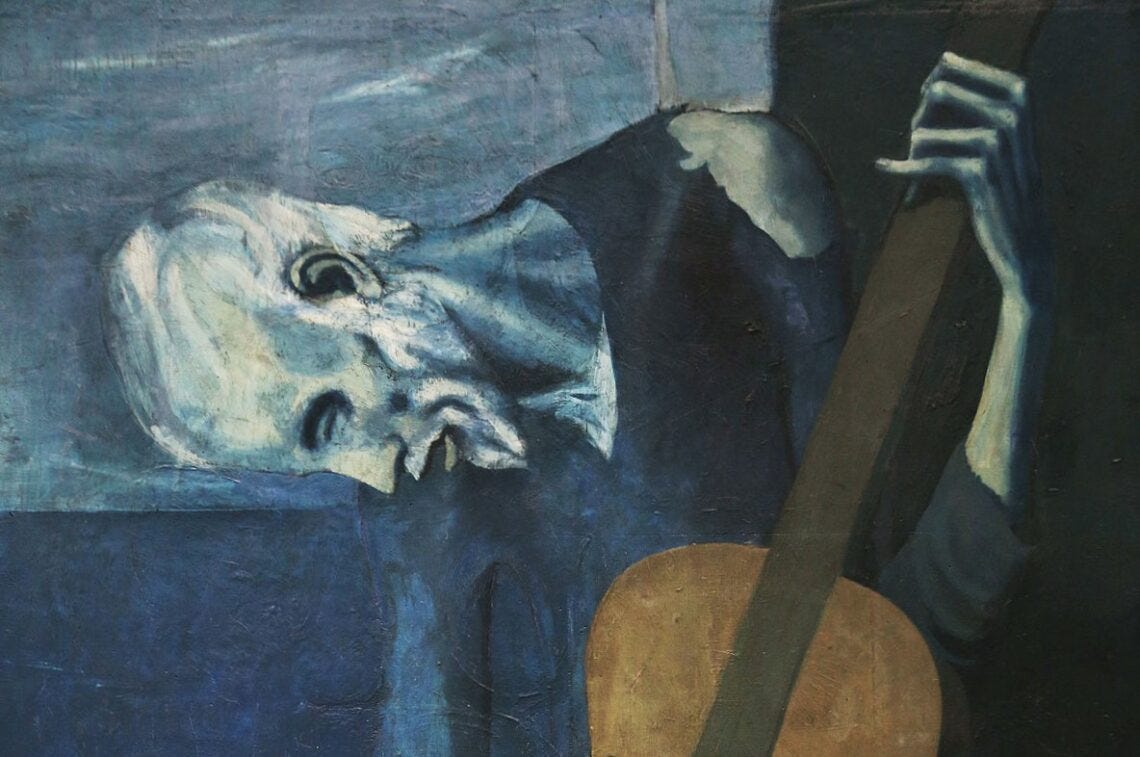
The same was true for Picasso. When he introduced Cubism, many critics dismissed the work as absurd. Friends questioned whether he had lost his ability to paint. Collectors turned away. They weren’t looking at one of the defining artistic revolutions of the twentieth century. They were simply looking at something unfamiliar.
Independent filmmakers experience this every day. A funding application is declined. A festival says no. A distributor passes. It is easy to assume rejection means the work has failed. History suggests something different.
The first person to reject an idea is often simply the first person unable to imagine its future.
2. Timing Is Often More Important Than Talent
Henry Moore is now celebrated as one of Britain’s greatest sculptors, but his early exhibitions generated confusion and even ridicule. Critics complained that his sculptures barely resembled the human figure. Newspapers mocked his work. Some people simply couldn’t understand why anyone would carve stone that way.

Then something remarkable happened.
The culture caught up.
The sculptures themselves never changed. Society changed. What had once appeared strange suddenly appeared visionary.
Filmmakers often make the mistake of believing every rejection is permanent. In reality, many projects fail because they arrive before the audience is ready for them. A screenplay rejected today may feel remarkably relevant three years later. A documentary nobody wants can suddenly become essential because the world changes around it.
One of the most dangerous phrases in filmmaking is “never.” More often than not, the answer is simply “not yet.”
3. Your Greatest Weakness May Become Your Greatest Strength
Muddy Waters didn’t sound polished. His voice carried dirt, experience and struggle. His guitar refused to behave politely. Record executives weren’t always sure what to do with him because he didn’t fit existing commercial expectations.
Fortunately, he never tried to become someone else.
That roughness became his signature. His music reshaped the blues, inspired generations of musicians and eventually influenced everyone from the Rolling Stones to Led Zeppelin.
Filmmakers often make the opposite decision. They spend years trying to remove precisely the qualities that make them distinctive. They soften difficult endings, simplify unusual characters and imitate whatever appears commercially successful. Yet audiences rarely remember films because they resemble other films. They remember the ones that feel unmistakably personal.
Perhaps the thing you are trying hardest to hide is the thing your audience has been waiting to discover.
4. Critics Don’t Write History
Reviews feel permanent when they arrive.
They’re anything but.
When Picasso exhibited Les Demoiselles d’Avignon, even artists who admired him found the painting disturbing. Many believed he had gone too far. Today it stands among the most influential paintings ever created.
The critics disappeared. The painting remained.
Cinema has always worked this way. Films now regarded as classics were dismissed on release, misunderstood by audiences or ignored by awards. Others became commercial failures before finding entirely new lives years later.
This doesn’t mean filmmakers should ignore criticism. Good criticism is invaluable because it exposes weaknesses we cannot see ourselves. But there is an enormous difference between criticism that improves the work and criticism that asks you to abandon your voice.
One deserves careful attention. The other deserves polite dismissal.
5. Great Artists Produce More Than Great Art
We love the myth of inspiration. The reality is usually repetition.
Mozart composed more than six hundred works. Picasso created around fifty thousand pieces during his lifetime. Henry Moore filled countless sketchbooks before beginning a sculpture. Muddy Waters performed thousands of shows, refining his craft one audience at a time.
None of them waited for perfection before beginning.
They simply worked.
This may be the hardest lesson for filmmakers. We often spend years trying to make our masterpiece while avoiding the possibility of making something imperfect. Yet masterpieces rarely appear first. They emerge after years of ordinary work, failed experiments and countless attempts that taught lessons no classroom ever could.
Stop trying to make the film that changes cinema. Make the next film.
The masterpiece usually arrives while you’re busy working on something else.
6. Failure Develops Taste
One of the greatest gifts failure gives us is discernment.
Every weak screenplay teaches structure. Every disappointing edit sharpens rhythm. Every unsuccessful crowdfunding campaign improves communication. Every production that goes wrong teaches leadership. Every film festival that says no forces us to ask harder questions about our work.
Failure isn’t wasted effort. It’s education.
The longer you stay in filmmaking, the less interested you become in cleverness and the more interested you become in truth. You begin recognising the difference between originality and novelty, between spectacle and emotion, between noise and genuine storytelling.
That understanding doesn’t arrive naturally.
It is earned.
Taste is not inherited. Taste is accumulated through mistakes.
7. Success Belongs To Those Who Return
The greatest danger isn’t making a bad film.
The greatest danger is allowing one bad experience to convince you that you should stop making films altogether.
Creative work is deeply personal, which is why rejection hurts so much. When somebody rejects our screenplay or our film, it feels as though they are rejecting us. Yet the greatest artists understood the difference.
Mozart kept composing.
Picasso kept painting.
Henry Moore kept carving.
Muddy Waters kept performing.
Not because success was inevitable, but because creating had become more important than approval.
Every year at Raindance we meet filmmakers whose journeys began with rejection. Scripts turned down by every funding body. Films passed over by festivals. Projects that spent years searching for backing before finally finding an audience. Their careers weren’t built on uninterrupted success. They were built on an extraordinary willingness to begin again after disappointment.
That has always been the spirit of independent cinema.
Not waiting for permission.
Not waiting for certainty.
Simply making the next film.
The Raindance Takeaway
If you’ve recently had a screenplay rejected, a grant application declined or a festival pass on your latest film, remember that you are walking a path travelled by every great creative figure who came before you.
History has never belonged to the artists who avoided failure.
It belongs to those who refused to let failure become their identity.
The world will always celebrate the finished masterpiece. Raindance celebrates something different. We celebrate the filmmaker who keeps writing after the rejection email arrives. The producer who makes one more phone call after another investor says no. The director who starts another project before the disappointment of the last one has faded.
Because that is where independent cinema has always lived.
Not in certainty.
Not in comfort.
But in the extraordinary courage to keep creating when success is nowhere in sight.
Failure is not creativity’s opposite.
It is creativity’s oldest collaborator.
And perhaps that’s why the next great film has probably already been rejected by someone.
See you at the movies.
Join the Raindance Eco-system
There are many ways you can touch the Raindance Ecosystem.
It doesn’t matter where you are in your career, I think there are relevant touch points for everyone from beginner to professional.
1.Raindance Film Festival - June 2027
submit your film now for consideration in the 35th edition of Raindance
2.Become a Raindance member
Build your career and network with a host of special offers, freebies and discounts.
3.Raindance Film Education
Hone your writing, directing and film producing skills in evening and weekend classes taught by leading industry professionals. evenings, weekends or degree courses.
4.Indie films online!
Watch shorts and features on our brand new online platform.
5.Donate to our charity
Since 2004 we have raised money to provide film education to deserving kids and adults. Unlock cinema for someone else.


The masterpiece usually arrives while you’re busy working on something else. #truth 💯👍❤️
So TRUE! Great article! :)